Spring has finally arrived here in classic New England fashion, raw, damp and moody. It is always a thrill to be on bare earth again and start working the land in preparation for the coming growing season. After a particularly rough winter, feeling the warmth of the sun and hearing the birdsongs change is a balm for the soul. Now is the time for awakening, migrating, seeking and planting.
I spent the winter months contemplating my concept of leadership, assessing how to put my beliefs to practical use and not keep them purely intellectual. These are, without a doubt, challenging and unprecedented times; we are all being tested in ways that could not have been anticipated. It seemed like a good time to revisit my position on the subject and see if I am holding true to my own code.
Throughout my studies on leadership, what has struck me the most often is how outward the focus is. Leadership as connection, guidance, encouragement, and support. But all the best qualities of the best leaders come from the core character of the individual, their capacity for internal leadership – how they set and maintain their own personal code of conduct, their own standards. Those nuances that are truly a part of one’s core personality and give others the perception of dignity and authenticity.
Nowhere have I seen this more powerfully played out than in my work with animals and children. Their instinctual (and often) unfiltered reactions to those around them speak volumes about how personal, internal leadership presents itself outwardly in ways that bridge gaps and allow for meaningful connection. It also speaks volumes about what happens when a solid, calm influence is not present.
This kind of authenticity requires commitment to a personal code of conduct and a regimen of self-care that keeps one grounded and centered – able to be consistent, reliable and approachable. In my work, I have found over and over that both children and animals will learn to give just enough to keep out of trouble when dealing with authority figures who are not able to connect on a deeper level. It is either that…or explosive behavior born out of intense frustration – not being heard, not being communicated with clearly, only pointing out what’s done wrong, never what’s done right.
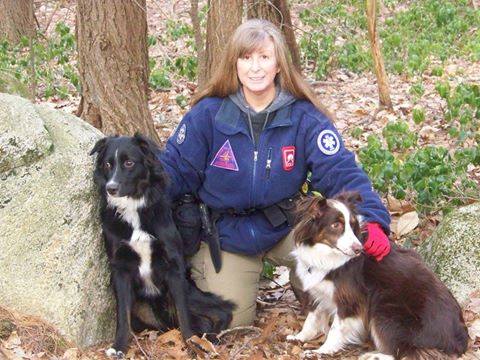
My first K9 SAR partner Casey is my best example of this. She was extremely intelligent and had a strong personality. She did not do well with the “because I said so” approach. My mentor and I had looked at a lot of puppies for my first partner when she finally said – “You know, there is a pup you should meet. She’s older (9 months) and has some issues, not ideal for a first-time handler, but let’s go see her.” This pup had a history of being willful and refusing to work, but during that first day I spent with her, it was obvious we had a deep connection. My mentor had already seen this with the other dogs on the team, how they liked to greet me or sit by me. That I radiated some level of calm that they responded to. In the 11 years I had with Casey I never once saw any of the behaviors I had been warned about. I spent our first two weeks encouraging her, respecting her and caring about what she thought and felt. It created a powerful partnership of mutual love and respect. She gave me 110%, not “just enough”, and I can only interpret this as having looked at her as a complete being, an individual with opinions, thoughts and feelings who was suffocating under the “my way or else” method. This has also been true of the ex-stallion my husband and I rescued and many of the children I have worked with in schools.
“The idea that some lives matter less is the root of all that’s wrong with the world.” – Paul Farmer
I do not consider myself a leader as in CEO or management material. But I am deeply invested in living a life that is thoughtful, intentional, and reverent and I believe that has shaped me into someone who endeavors to exude calm, strength, patience and reliability. I adhere to the principle of the “benevolent alpha” that has been coined in canid research circles. The most successful packs are those with a strong alpha pair who are nurturing and protective, not aggressive or authoritarian. It warrants a re-thinking of the “alpha” term in the traditional sense – someone out ahead, aggressive, bold to a leader whose overall success is intimately tied to the success of each individual in their group. The best leaders know each individual in their group, what they bring to the table, place them where they will do well and provide them with what they need to excel in their roles. Likewise, individuals who invest in internal leadership know where they belong and where they do not, they take responsibility for being where they will do well and continue to evolve.
In canine and equine training circles this is referred to as R++ training, positive reinforcement with a minimum of negative reinforcement. Instead of punitive measures for correcting unwanted behaviors, alternatives are offered, and the trainer offers the security, safety and guidance that cultivates maximum learning.
In short, stress greatly reduces the ability to learn, therefore allowing or creating stressful situations is highly counterproductive:
“Deep survival stress (or chronic “survival mode”) narrows cognitive function by triggering the amygdala to hijack the brain, overriding the prefrontal cortex—the center for logic and decision-making. This state reduces cognitive capacity by up to 37%, causing narrow focus, impaired memory, and a shift from thoughtful action to impulsive reactivity, effectively reducing the ability to think critically.”
This is touched on in detail in Laurence Gonzales’ book Deep Survival (highly recommended reading)- it is fair to say we are all living primarily in chronic survival mode these days – therefore it is also fair to say that a leader should be invested in creating an environment that is nurturing and supportive, to reduce stress and promote expansive learning.
Which brings us back to ourselves. When we are chronically stressed our own ability to create calm is diminished. It is our personal responsibility to find ways to manage our own stress so we do not negatively impact our dogs, horses, team, students, co-workers etc…
Whether you are in a leadership role outwardly or not, internal leadership will provide you with the tools you need to navigate an increasingly chaotic world. And you might be surprised at how this will radiate outward, if we all took some time to school ourselves in the ways of dignity and authenticity, we might be able to set a new standard of living and being that benefits everything and all beings.
“What you do makes a difference, and you have to decide what kind of difference you want to make.” — Jane Goodall
Recommended Reading:
Deep Survival, Laurence Gonzales
Here If You Need Me, Kate Braestrup
Last Child in the Woods, Richard Louv
The Other End of the Leash, Patricia McConnell
The Man Who Listens to Horses, Monty Roberts
 Cu Ruadh Artisans